
 My Account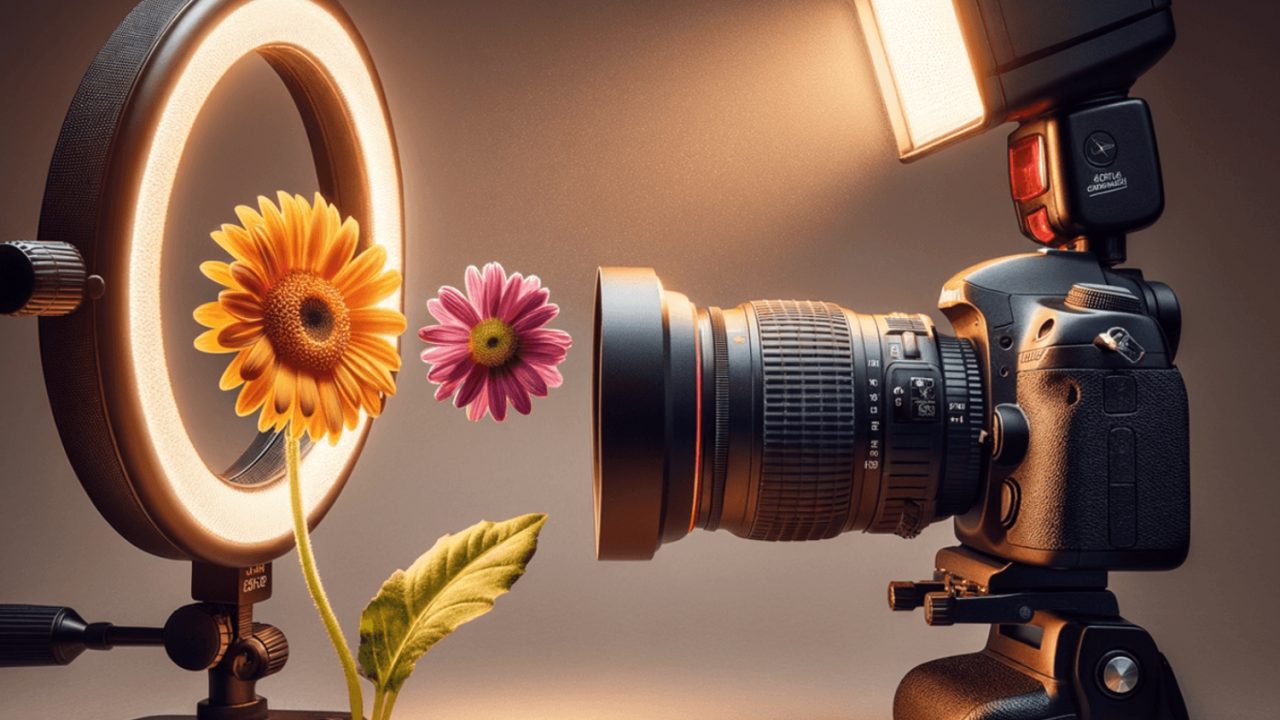
Introduction
Macro photography, with its focus on small subjects and intricate details, requires careful lighting to capture textures, shapes, and colors accurately. Two of the most popular lighting tools for macro photographers are ring lights and flash diffusers. Both can enhance the quality of your shots, but each has its unique benefits and limitations. Understanding the differences between these tools will help you choose the best lighting option for your macro photography needs.
1. Ring Lights: Bright, Even Illumination
A ring light is a circular light source that fits around your camera lens, providing uniform, shadow-free lighting. This setup is ideal for macro photography because it evenly illuminates the subject, especially when you’re working with tiny objects like insects, flowers, or textures.
Pros of Ring Lights:
- Even Lighting: Ring lights produce soft, diffused light, eliminating harsh shadows and creating a smooth look on your subject.
- Easy to Use: They’re simple to set up and use, making them an excellent option for beginners or photographers who need consistent results.
- Reduces Shadows: Since the light source is placed around the lens, it helps fill in shadows that might otherwise obscure fine details.
- Close-Up Focus: Perfect for close-up work, ring lights illuminate the subject evenly from all angles without creating harsh highlights.
Cons of Ring Lights:
- Flat Look: Because the light is coming from a single, even source, the resulting image can sometimes appear flat and lacking in depth.
- Limited Flexibility: You may have limited control over the direction of the light, making it harder to add contrast or creative effects.
2. Flash Diffusers: Directional Lighting with Softness
A flash diffuser is an attachment for your camera’s flash that softens and spreads the light. It disperses the harsh flashlight, resulting in a softer, more natural effect that’s ideal for macro subjects.
Pros of Flash Diffusers:
- Controlled Lighting: Flash diffusers allow for more directional control over the light, enabling you to shape and modify the lighting as needed.
- Better Contrast: Using a flash diffuser can create more depth in your photos, as the light falls off more naturally compared to a ring light.
- Versatility: Flash diffusers are often more versatile, allowing you to bounce light off walls or ceilings to create softer, more natural light.
Cons of Flash Diffusers:
- Potential Shadows: Depending on the angle of the light, flash diffusers can still cast shadows, which might require more adjustments during the shoot.
- Learning Curve: Flash diffusers take more skill to use effectively, especially when you need to control direction and power.
Conclusion
Both ring lights and flash diffusers are valuable tools in macro photography, but the best choice depends on your shooting style and desired results. Ring lights offer consistent, shadow-free illumination, making them ideal for beginners or quick, even lighting. On the other hand, flash diffusers provide more control, allowing for creative, dynamic lighting that can shape the light and add depth to your images. Experiment with both to discover which works best for your macro photography projects.
#MacroPhotography #RingLights #FlashDiffusers #PhotographyLighting #PhotographyTips #MacroPhotographyGear #PhotographyEquipment


